Fire Alarm Requirements for Commercial Premises in the UK
Why Fire Alarms Matter
Fire alarm systems aren’t just a “nice to have” for businesses — they are a critical safety measure. They provide early warning of a fire, giving people more time to escape and limiting the potential for injury, loss of life, and property damage. Beyond safety, having the right system in place is also a legal requirement for all commercial premises in the UK.
The Legal Framework
Commercial fire alarms in the UK are governed by several key regulations and standards:
- Regulatory Reform (Fire Safety) Order 2005 – The main piece of legislation for England and Wales. It places the responsibility on the “responsible person” (usually the employer, landlord, or occupier) to ensure that an appropriate fire detection and alarm system is in place.
- Building Regulations (Approved Document B) – These provide requirements around fire safety in building design, including guidance on escape routes, fire separation, and fire detection systems.
- British Standard BS 5839 – The national standard that sets out how fire detection and alarm systems in non-domestic premises should be designed, installed, commissioned, and maintained. The latest version, BS 5839-1:2025, includes updates to reflect best practice.
What Businesses Are Required to Do
The law does not prescribe a single “one-size-fits-all” solution. Instead, the requirements depend on the type of premises, how they are used, and the level of risk. Key duties include:
- Carrying out a fire risk assessment – This must be “suitable and sufficient” and regularly reviewed. The assessment determines what type of fire alarm system is necessary.
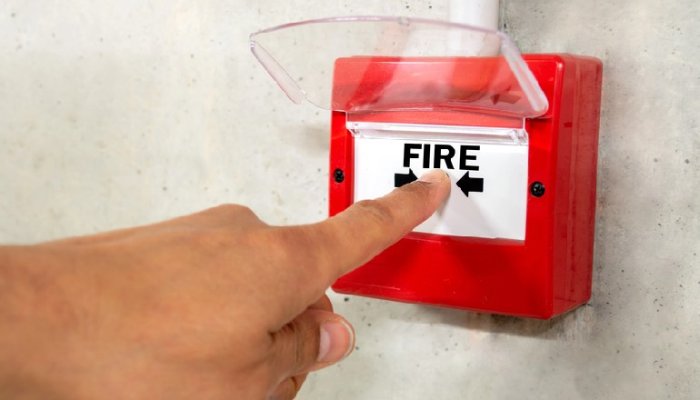
- Providing an appropriate alarm system – For small, low-risk premises, a simple manual call point and sounder may be enough. Larger or higher-risk premises often need more complex automatic detection systems with multiple zones.
- Designing and installing to the correct standard – Systems should be designed and installed in accordance with BS 5839-1 to ensure correct detector placement, audibility, and reliability.
- Commissioning and certification – Once installed, systems must be tested, commissioned, and certified to confirm that they meet the required standard. Documentation such as logbooks and test reports should be kept.
- Ongoing testing and maintenance – Fire alarm systems must be regularly tested, usually weekly, and serviced by competent professionals at agreed intervals. Maintenance records must be up to date.
Key Updates in BS 5839-1:2025
The most recent update to the standard introduced some important changes, including:
- A stronger emphasis on smoke detectors in sleeping areas, as they provide earlier warning than heat detectors.
- Clearer rules around extensions and modifications to existing systems.
- Greater focus on documenting system variations and keeping accurate records.
Practical Considerations
When deciding what kind of system is “appropriate,” businesses should consider:
- The size and layout of the building.
- The number of occupants and whether people may be sleeping on the premises.
- Whether there are individuals with mobility or hearing impairments who may require additional warning measures such as visual alarms or voice alarms.
- The types of activities carried out and whether they involve higher fire risks.
Consequences of Non-Compliance
Failure to comply with fire alarm requirements can lead to serious consequences, including:
- Enforcement action from the fire service.
- Prohibition notices, which may prevent you from using part or all of the building until safety issues are resolved.
- Heavy fines or even prosecution if serious breaches are found, particularly if a fire occurs.
- Potential invalidation of insurance policies if alarm systems are not compliant or properly maintained.
Best Practice for Businesses
To stay compliant and safe:
- Appoint a competent person to oversee fire safety responsibilities.
- Carry out and regularly review your fire risk assessment.
- Install a system that meets the latest standards and is suitable for your premises.
- Keep detailed documentation and maintenance records.
- Ensure your system is regularly tested and serviced by qualified professionals.
- Train staff so they know how to respond in the event of a fire.
Final Thoughts
The law does not simply require every business to install the same type of fire alarm system. Instead, it requires you to have a system that is appropriate for the level of risk in your premises, properly maintained, and compliant with recognised standards. Meeting these requirements is not only about avoiding fines — it is about protecting people’s lives and livelihoods.