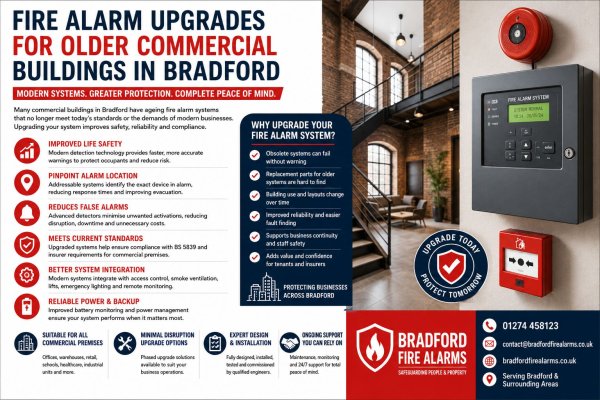
Fire Alarm Upgrades – Many commercial buildings across Bradford were constructed long before modern fire alarm technology became standard. From converted mills and Victorian office buildings to older retail units and industrial premises, ageing infrastructure often presents significant challenges for business owners trying to maintain reliable fire protection.
While older fire alarm systems may still appear functional, many no longer provide the level of performance, reliability or compliance expected in today’s commercial environments. As businesses expand, premises layouts change and regulations evolve, outdated systems can quickly become a weakness rather than a safeguard.
For many Bradford businesses, upgrading a fire alarm system is not simply about replacing old equipment. It is about improving life safety, reducing operational risk and ensuring the building remains suitable for modern occupancy.
One common issue with older commercial fire alarm systems is limited fault monitoring. Traditional conventional systems may only indicate a general alarm zone, making it difficult to identify the exact detector or device that has activated. In larger premises, this can delay investigation and evacuation procedures. Modern addressable fire alarm systems allow every detector, call point and interface to be individually identified, providing far greater accuracy and faster response times.
This becomes especially valuable in larger office buildings, schools, hotels and industrial sites where locating the source of an activation quickly is essential.
Another major concern with ageing systems is component availability. Many older fire alarm panels and detectors are now obsolete, meaning replacement parts are increasingly difficult or impossible to source. When faults occur, businesses can face lengthy downtime or expensive temporary repairs while alternatives are explored.
Upgrading to a modern system provides access to current equipment, ongoing manufacturer support and easier long-term maintenance.
False alarms are another issue frequently linked to older systems. Detector technology has improved significantly over recent years, with modern devices offering better discrimination between genuine fire conditions and environmental interference. Older detectors may become overly sensitive due to contamination, age or outdated sensing methods, leading to repeated disruptions.
For commercial premises such as offices, warehouses and retail environments in Bradford, false alarms can affect productivity, staff confidence and customer experience. In some cases, repeated unwanted alarms can even result in charges from attending services or trigger unnecessary building shutdowns.
Modern fire alarm upgrades can also improve integration with wider building systems. Today’s commercial fire alarms can interact with access control systems, magnetic door releases, smoke ventilation systems, lift controls and remote monitoring services. This creates a more coordinated emergency response throughout the building.
For businesses operating in multi-occupancy premises or shared commercial buildings, integration and zoning become particularly important. Modern systems allow different areas of a building to be managed more effectively while still maintaining overall site protection.
Battery reliability is another hidden problem in older systems. Standby batteries deteriorate gradually over time and may fail to provide sufficient backup during a mains power outage. While the system may appear operational during normal conditions, it may not perform correctly during an actual emergency. Upgraded systems provide improved power management, fault monitoring and battery performance.
Many older buildings in Bradford have also undergone changes in use over the years. Former industrial spaces may now contain offices, storage areas, workshops or mixed commercial use. Internal walls may have been added or removed, occupancy levels increased and escape routes altered. Fire alarm coverage originally designed decades ago may no longer suit the building’s current layout or risk profile.
A professional fire alarm upgrade includes a review of detector positioning, sounder coverage, evacuation strategy and system category to ensure the protection remains appropriate for the premises.
Commercial insurance requirements are also becoming more demanding. Insurers increasingly expect evidence of properly maintained and compliant fire detection systems, particularly in higher-risk premises. An outdated or unreliable system may affect insurance terms or expose businesses to unnecessary liability.
Importantly, upgrading a fire alarm system does not always require a complete replacement overnight. In some commercial buildings, phased upgrades can be carried out to minimise disruption while improving critical areas first. Experienced fire alarm engineers can assess the existing infrastructure and recommend the most practical long-term solution.
Businesses searching for Fire Alarms Bradford services are increasingly recognising the value of proactive upgrades rather than waiting for major failures to occur. A modern fire alarm system improves reliability, enhances compliance, reduces operational disruption and helps protect both people and property.
Whether protecting offices, industrial units, schools, retail premises or converted heritage buildings, investing in a modern commercial fire alarm system provides long-term peace of mind and supports safer day-to-day operations.