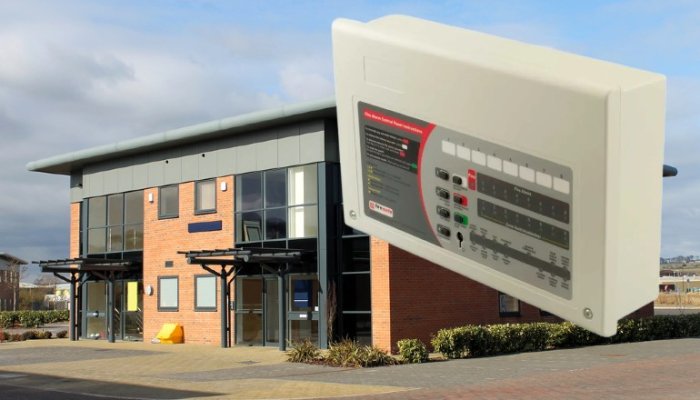
Bradford Commercial Fire Alarm Systems – Fire alarm systems are a fundamental requirement for commercial buildings in Bradford, but effective fire detection goes far beyond meeting minimum legal standards. In a city with a diverse mix of offices, warehouses, retail spaces and industrial units, fire alarm systems must be designed to reflect how each building is used on a daily basis. A properly specified system not only ensures compliance but also provides early warning that protects lives, assets and business continuity.
Commercial fire alarm systems are typically categorised based on the level of protection they provide. Life protection systems (such as L2 or L3) are designed to ensure occupants can evacuate safely, while property protection systems (such as P1 or P2) focus on early detection to minimise damage. In Bradford, many businesses require a combination of both, particularly where buildings are occupied by staff during the day and left unattended overnight.
Offices are one of the most common commercial environments requiring fire alarm systems. While they are generally considered lower risk compared to industrial premises, they still contain a significant amount of electrical equipment, paper storage and furniture that can contribute to fire spread. Automatic detection, typically using smoke detectors, ensures that any fire is identified quickly, even if it starts outside of working hours.
Industrial and warehouse environments in Bradford require a more tailored approach. Large open spaces, high ceilings and varying environmental conditions can affect how detectors perform. In these settings, heat detectors or beam detection systems may be more appropriate than standard smoke detectors. The goal is to ensure reliable detection without triggering false alarms that could disrupt operations.
Retail premises present another set of challenges. High footfall, changing layouts and extended opening hours mean that fire alarm systems must be both effective and unobtrusive. Detection devices should be positioned to provide coverage without interfering with the customer experience, while manual call points must be easily accessible to staff.
System design must also consider audibility. Alarm sounders should be positioned so that all occupants can clearly hear the alarm signal, even in noisy environments such as workshops or busy retail spaces. In some cases, visual alarm devices may also be required to support individuals with hearing impairments.
Integration is an increasingly important aspect of modern fire alarm systems. In Bradford commercial premises, fire alarms are often linked with other systems such as access control, lifts and ventilation. For example, a fire alarm activation may trigger doors to release, lifts to return to ground level or ventilation systems to shut down. This coordinated response helps manage the spread of fire and supports safe evacuation.
Maintenance is a legal requirement and a critical part of system reliability. Fire alarm systems should be tested regularly, with weekly user checks and periodic inspections carried out by a competent engineer. Faults must be addressed promptly to ensure the system remains fully operational at all times.
False alarms can present a significant issue for businesses, leading to disruption and potential complacency among staff. Proper system design, correct detector selection and regular maintenance all help reduce the likelihood of unwanted activations.
For Bradford businesses, a fire alarm system is not just a compliance measure — it is a critical safety system that must function reliably under pressure. When designed correctly and maintained properly, it provides early warning that protects both people and property, supporting a safe and resilient workplace.